Our consultants deliver best-in-class training and exercising to build resilient organisations. We test and measure your capabilities, objectively identify areas for improvement, and help you to strengthen them.
We offer a wide range of resilience training and courses to meet the needs of every level. From introductory sessions for beginners through to specialised training for seasoned professionals, all designed to improves skills and capabilities.
4C consultants assess resilience on many factors in the organization ranking them from one to five to define capabilities in accordance to “what good looks like” for your organization. Based on this, improvements can be prioritised that provide the best ROI by strengthening capabilities for preparing for, managing, and recovering from a major business or operational disruption or crisis.
To define training objectives, we assess your capabilities and “what good looks like” for your organization. Our consultants evaluate your current status, pinpoint where improvements will have the most impact, and define the best way to achieve them. We use 4C capability models, methodology and our resilience software to do this effectively. Following this we develop a plan for improvement.
We offer a wide range of resilience training and courses, from introductory sessions for beginners to specialised training for seasoned professionals. Our experts regularly hold training sessions at leading organisations in the finance, public, travel, food, energy and other highly-regulated sectors. Training material and processes are continuously updated based on lessons learned, best practices, and benchmarking from our experiences. This ensures you get proven and rewarding training that delivers on your goals and objective.
Typical crisis management training:
Perception vs Reality: A dynamic course designed to equip participants with the essential knowledge and skills needed to effectively navigate and manage crises.
Decision Making in a Crisis: A transformative learning experience for decision making in a crisis.
Crisis Management Teams: A comprehensive course designed to empower participants with the leadership and strategy skills, knowledge and confidence to guide their teams through challenging and high-stakes situations.
What happens when a critical server goes down, a cyberattack occurs, or a hurricane shuts down production? How will it impact your organisation, how will your crisis team respond, and will your continuity plans deliver? We develop scenarios and actions to test your team based on the greatest needs.
Our scenario testing looks at your organisation’s ability to withstand disruptions and remain within impact tolerance levels to critical services . These are particularly relevant for critical infrastructure providers and any organisations subject to compliance reporting requirements such as Operational Resilience, DORA and NIS2.
Tabletop exercises bring people together to understand what a disruption or crisis entails and act out a step-by-step response as part of a structured plan. This can be extended through gameplay which challenges and adds consequences to any actions taken, better mirroring a response. Tabletop exercises can be run using our Resilience software and reused with other participants.
Simulation exercises are more extensive involving many participants from across the organisation or even suppliers, partners, and industry peers.
Simulations can test how a disruption will impact the organisation, customers, the market, or the industry as a whole. They typically include a more comprehensive storyline, such as filmed news reports, social media communications and much more.
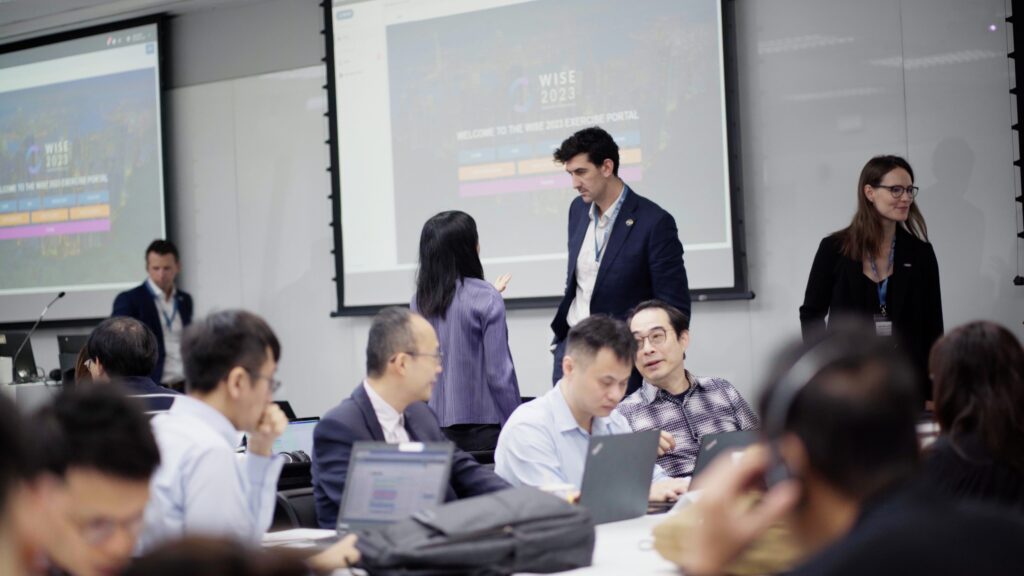
Our consultants have run industry-wide simulation exercises, including one for 42 banks in the Hong Kong financial sector. This was done using our Resilience software.
Don’t take our word for it!
Success around the world
Connect with our experts today to discuss how we can tailor our solutions to meet your organization’s unique needs.

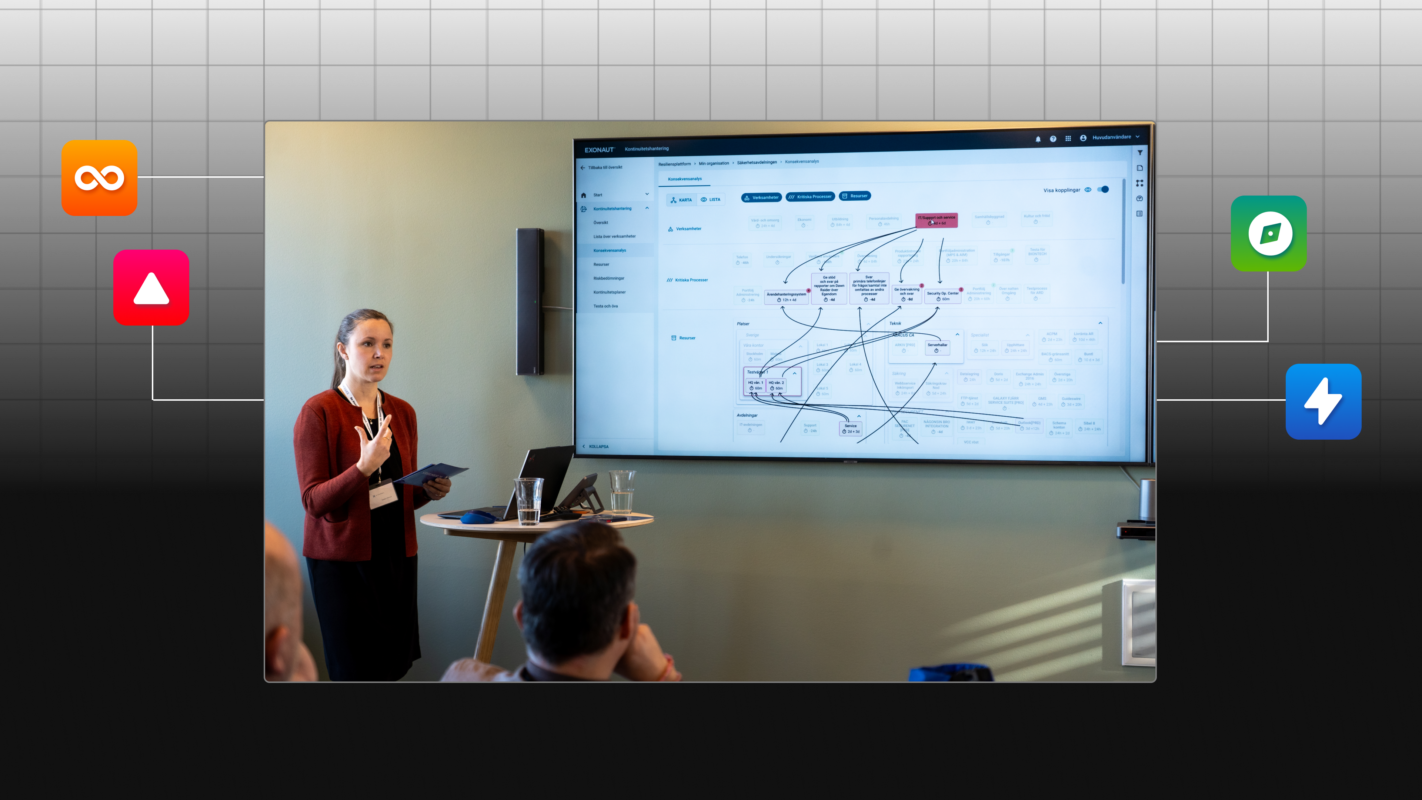
Exonaut Training and Exercise Management software puts you in control of your exercises, giving you the necessary data to design and plan effective exercises that make the organization stronger and improve collaboration and communication among resilience teams and stakeholders.
Manage disruptions
Control your risks
Handle crises fast
Run training exercises