While a state-based agency may manage its own firefighting training and exercise program, it must also align with broader cross-agency preparedness initiatives, particularly in regions with shared disaster responsibility zones. This creates a need to coordinate operations effectively without losing control of internal programmes.
In this environment, common challenges include:
- Limited visibility of training and exercise activities across partner agencies
- Duplicated efforts when developing similar exercises to peer agencies
- Difficulty coordinating multi-agency preparedness exercises at scale
- Inconsistent readiness assessment, evaluation and reporting of outcomes
Why multi-agency emergency preparedness requires a structured approach
A structured and collaborative approach to training and exercising enables a firefighting agency to maintain control of its own fire service training program while participating in broader preparedness activities.
Exercise Manager from 4C Strategies is an end-to-end exercise and training management system for planning, delivery and assessment tool, is designed to deliver this capability. Thanks to the Workspace function, for example, an agency can retain full ownership of its training schedules, exercise design and evaluation processes. At the same time, selected exercises can be shared with other organisations, enabling coordinated participation where required. This allows the emergency agency to:
- Manage internal training and exercises independently while contributing to joint activities
- Share and access relevant exercises with partner organisations during high-risk periods, supporting cross-agency collaboration
- Reuse exercise frameworks and evaluation methods to reduce duplication of disaster preparedness training
This capability also supports a more efficient approach to multi-agency emergency preparedness across all agencies, delivering key benefits such as:
- Improved alignment between agencies, emergency services and other stakeholders, through improved emergency response coordination, particularly in higher risk regions where equal input and effort is needed but not necessarily available
- Reduced cost and effort through shared exercises and reusable content
- Increased participation in multi-agency emergency preparedness exercises without additional administrative burden
Enhancing cross-agency collaboration with a dedicated exercise management system

Using Exercise Manager from 4C Strategies in a shared-agency model also enables a number of key capabilities for firefighting agencies. These include:
- Workspace-based control with selective sharing between emergency organisations via highly granular rules and permissions models
- Workflows aligned to internationally recognised training and exercise design principles
- Resource management capabilities to track availability of assets and shared resources for emergency exercise planning
- Device-independent observation tools and readiness evaluation capability, with very low technical footprint and equipment overheads
- A collective data model that allows for a much broader view of readiness, particularly in cross border situations
Exercise Manager delivers measurable emergency preparedness outcomes and benefits
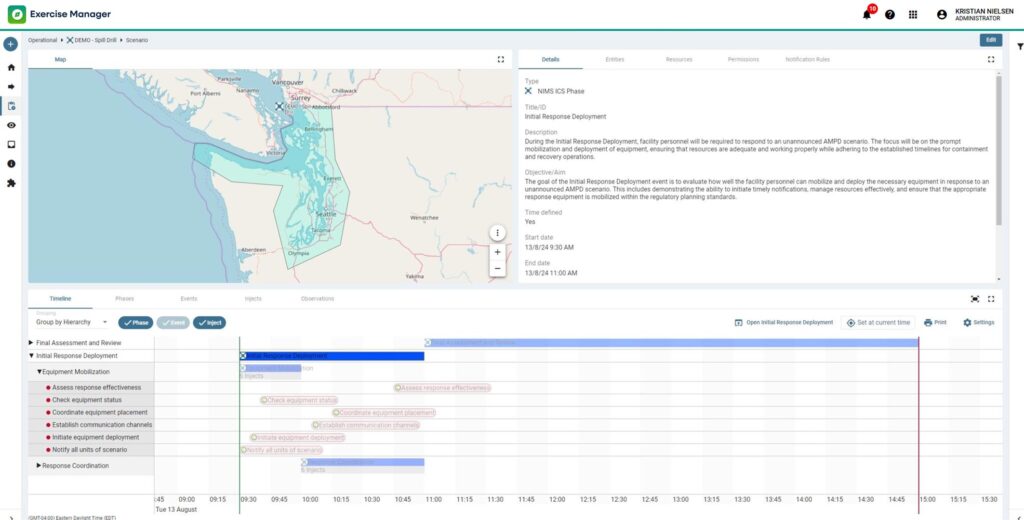
By structuring training and exercising within a shared but controlled environment agencies gain access to a richer set of data across all incident preparedness activities. With dedicated dashboard and reporting capabilities this information can be tailored to different levels of the organisation and operational teams can review detailed exercise outcomes and participation data to support continuous improvement.
Program leads can track trends across multiple exercises, identify recurring gaps and ensure alignment with seasonal preparedness objectives. Additionally, senior leadership gains a consolidated view of capability development across the agency and its partners.
This delivers three core benefits:
- Multiple data points with a more complete and structured view of training and exercising, enable stronger evaluation of preparedness over time
- Reduced cost of shared exercises and reusable content reduces duplication and lowers the overall cost of exercising
- Increased awareness improves visibility of activities, outcomes, and capability gaps across the agency and its partners – improving emergency response coordination
When combining agency-level control with cross-agency visibility, firefighting agencies strengthen preparedness while maintaining ownership of their firefighting training and exercise programs.
Get in touch
If you want to know how you can get started with Exercise Manager or want to know how we support emergency services and military forces around the globe, get in touch today.