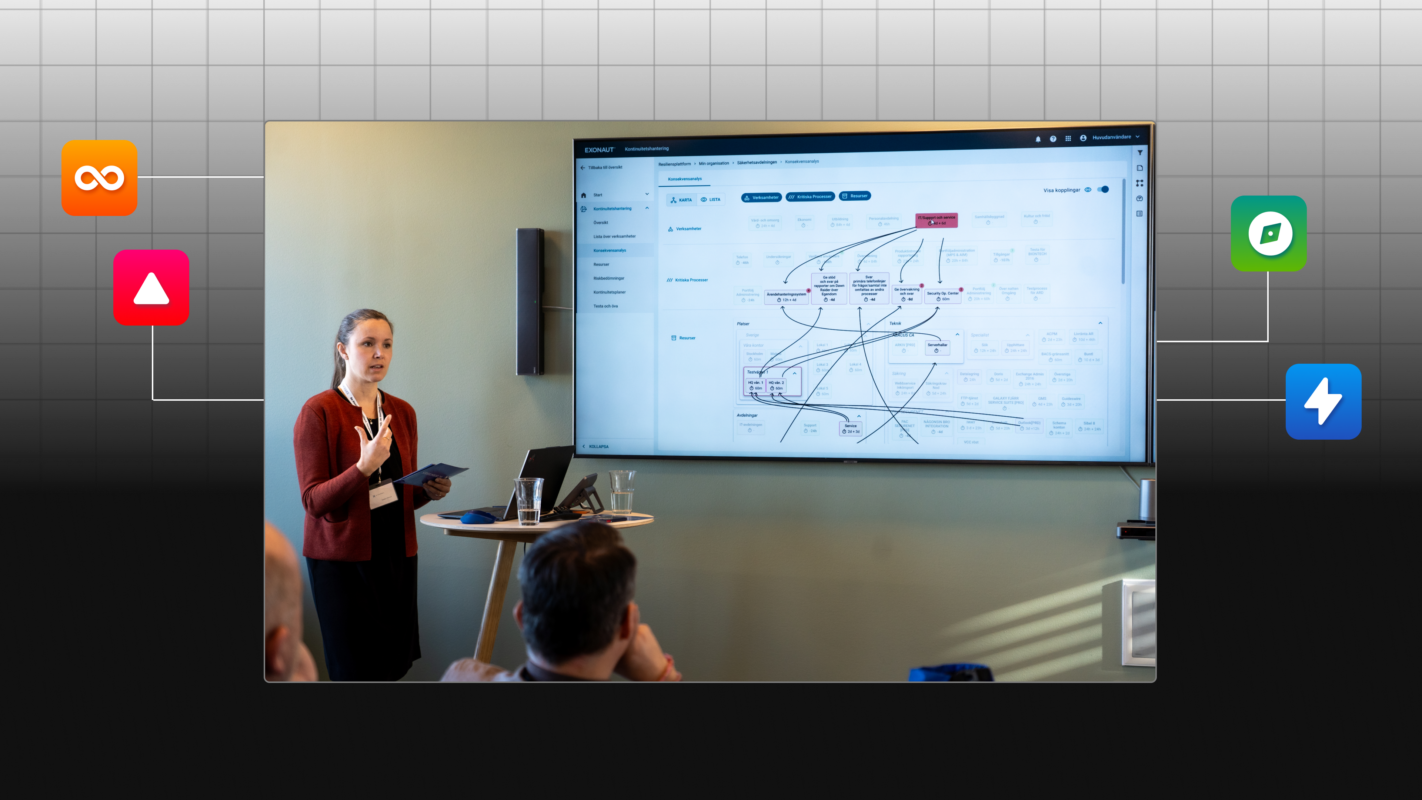
At its best, the BIA gives the organisation a clear view of what truly matters: cutting through assumptions to reveal key vulnerabilities, highlighting how quickly a disruption can turn into a serious incident, showing what should be prioritised during a disruption, and clarifying what it takes to maintain critical operations. But in practice, the BIA too often becomes a large information-gathering exercise, largely driven by compliance requirements that generates plenty of data but too little insight.

The need for a modern approach to the BIA
The challenge with traditional BIA frameworks is that they were designed for a much more linear and predictable operating environment. Today’s businesses are highly interconnected, yet BIAs are still often carried out in isolation, looking at one process or area at a time. This results in multiple assessments that describe individual pieces of work but fail to show how these pieces connect, where they rely on the same systems or suppliers, or how disruption in one area affects another. Without a view of these shared dependencies, the output reflects only part of the operational reality.
This is why the BIA approach needs to evolve. Identifying what is critical is one thing, understanding how impacts escalate across the organisation, how multiple activities contribute to a critical service, and where a disruption becomes genuinely unacceptable is far more complex.
The Maximum Tolerable Period of Disruption (MTPD) is often referenced but not consistently defined or applied, and Recovery Time Objectives (RTOs) and Recovery Point Objectives (RPOs) are frequently inherited from older plans rather than aligned with today’s risk appetite. A defensible MTPD provides the anchor point, but RTOs and RPOs only become meaningful when they are tied to that threshold and informed by how impacts actually unfold across the wider organisation.
Without a stronger link between impact, tolerances, and recovery expectations, continuity plans inevitably gravitate toward generic or comfortable timeframes that offer limited strategic value. Mature BIA outputs replace those assumptions with traceable logic that you can stand behind.

Build the resilience of your organization from top to bottom
With over 25 years of experience around the globe, our consultants help organisations be better prepared and faster to respond to crises and disruptions.
Setting the right structure for your organisation
Equally important is selecting the right structure for the BIA. Department-based approaches may be easier to roll out but often miss cross-functional dependencies, providing a siloed view of what is critical. Function-based models reveal far richer insights but often require more coordination. Scenario-based assessments help engage leadership but only show part of the landscape. Balancing these approaches, or combining them, is essential for producing BIAs that truly reflect how the business operates.
Data collection plays a central role too. Achieving consistency across impact scoring, dependency mapping, and resource requirements is notoriously difficult when every team interprets the criteria differently. The question is not what information is gathered, but how it is framed, validated, and ultimately used. The organisations that succeed are those that collect less noise and more meaningful insights.
When the workload outgrows the spreadsheet
As business operations grow in complexity, many teams are discovering that traditional tools simply cannot keep up. Spreadsheets offer familiarity but not scalability. They struggle with dependency mapping, multiple owners, auditability, and real-time collaboration.
This is where dedicated business continuity software, such as Continuity Manager from 4C Strategies, is a game-changer. The fit-for-purpose software automates workflows, standardises impact criteria, visualise upstream and downstream dependencies, calculates time-based thresholds, and maintains audit trails. Instead of wrestling with version control, inconsistent inputs and multiple BIAs, teams can focus on interpretation and resource management. Automated reporting lowers the regulatory burden, while the ability to trigger continuity plans turns the software into a powerful tool for responding to disruptions. In short: the technology doesn’t replace expertise, it empowers it.
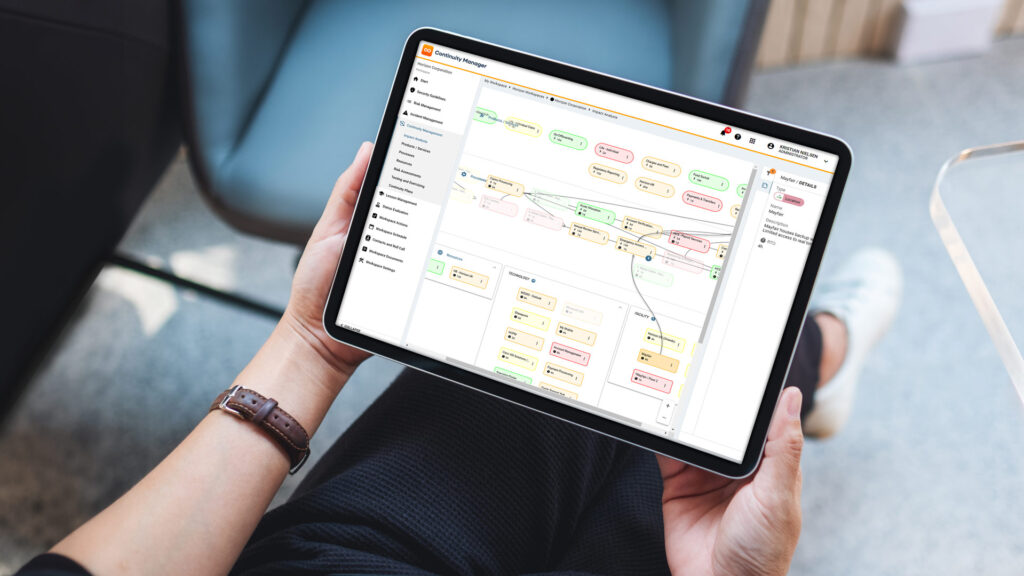
Maintain operations during disruptions
Continuity Manager takes BCM from planning to operations, ensuring you not only know what to prioritize in a disruption, but can also trigger plans to maintain critical services.
Supporting key business decisions with the BIA
Where the BIA starts to make a real difference is when its insights begin to support decisions rather than sit quietly in a report. Even small steps, such as using time-based impacts to set more realistic recovery expectations or referring to dependency mapping during operational or change planning discussions, can help you understand their exposure more clearly. As trust and uptake of the BIA as a strategic tool increases, use cases grow. Leadership, for instance, can use it to gain a clearer view of where the organisation is most vulnerable and where attention may be needed. This gradual shift, from a compliance requirement to a source of strategic guidance, is where many continuity programmes are aiming, even if progress happens in stages.
Start making a difference today
To support this evolution, we have created the Business Impact Analysis Guide: Foundational Tools for Strategic Continuity. It brings together 25 years of experience from global resilience work and explores how you can structure BIAs effectively, improve data quality, align impact scoring, embed time-based thresholds, and transform outputs into meaningful strategic direction. It offers enough detail to strengthen your approach, without overwhelming teams or forcing them to start from scratch.
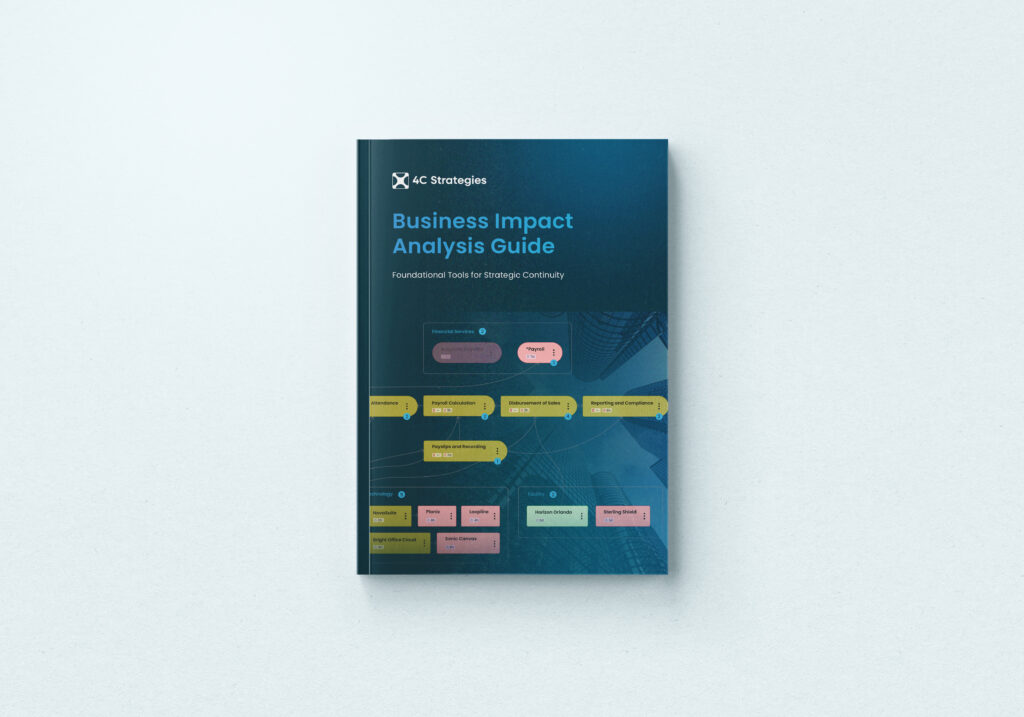
The Practitioners’ Impact Analysis Guide
Continuity Manager takes BCM from planning to operations, ensuring you not only know what to prioritize in a disruption, but can also trigger plans to maintain critical services.